The Des Moines Meeting: An Encounter with Communion and Liberation
by Benjamin Shane Evans | May 19, 2026
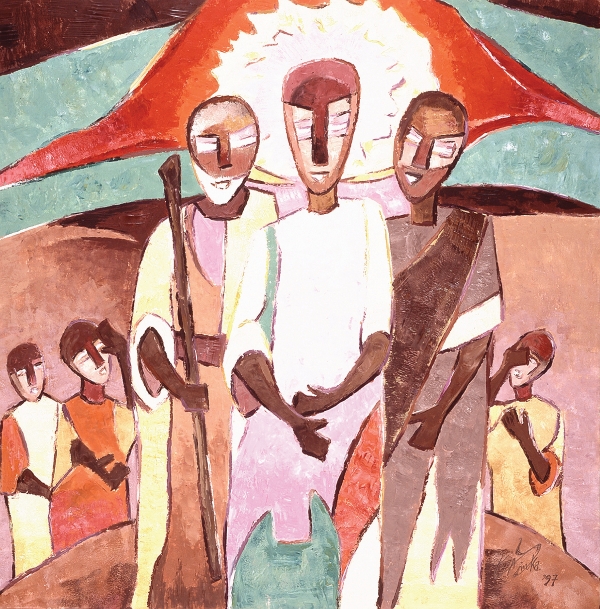
The Incarnation of Christ can be experienced in every moment: That is how Curtis Brown, a member of the Des Moines community of Communion and Liberation, summarized the movement's charism.
“Everything that is given to us is an opportunity to encounter Christ,” Brown said. “It is an opportunity to constantly say, ‘Where is Jesus Christ in this?’”
That “heightened awareness of the incarnation” is one of the foundational charisms that the Des Moines branch of the Communion and Liberation movements wishes to offer with its upcoming The Des Moines Meeting.
The event will take place on Saturday, June 6, at the Catholic Pastoral Center, 601 Grand Ave, in Des Moines. The daylong event begins at 11 a.m. with a welcome and introduction by Bishop William M. Joensen. It will include three panel discussions on the movement’s founder, Monsignor Luigi Giussani; "Gen Z and Faith"; and "The Dignity of Work." It will conclude with an evening piano concert featuring the works of Rachmaninoff and Chopin.
A brief history of the movement
The meeting is an initiative of the Des Moines community of Communion and Liberation, a Vatican-recognized association of the faithful.
According to the association’s website, the Communion and Liberation movement began with Monsignor Luigi Giussani, a Milanese priest who taught theology in public schools in the 1950s–60s. Observing high religious practice but seeking an emphasis on the personal encounter with Christ, Giussani fostered a now-worldwide movement: the Fraternity of Communion and Liberation. Its charism seeks to enrich Catholic life while also fully participating in the Church, what Brown called a “vocation within a vocation.”
As Brown said, the charism encourages the perspective that all reality, including news, work, art, and music, is an opportunity to encounter Christ. It promotes the idea that reality is inherently positive and continues to be transformed through the ever-present Incarnation.
“Living the charism is like going through all of your daily life, everything that you work on, while ‘seeing Jesus Christ just out of the corner of your eye,’” Brown said. “So that in everything we do, we never lose sight of His presence.”
According to Brown, the local Communion and Liberation group, called a “School of Community,” typically gathers weekly for a one-hour meeting that begins with music and the Angelus, followed by a reading and discussion about how that reading applies to the members’ lived experience. The community is intentionally open, inviting anyone who senses a connection with the charism to explore without pressure or formal commitments.
The genesis of The Des Moines Meeting
After attending Communion and Liberation's annual three-day meeting called the New York Encounter with his son Maximilian, Brown felt the call to share the experience offered to him: that is, to engage in the Incarnation in each present moment and discuss contemporary topics through the living presence of Christ. The local Communion and Liberation’s school of community decided to hold The Des Moines Meeting to accentuate this encounter of Christ’s continued presence to the Des Moines community.
Dr. Holly Peterson, one of the participants on The Des Moines Meeting’s "Giussani Panel," said the movement is a community marked by friendship, trust, and practical support, with members connecting across cities, meeting families, and sharing meals to support each other in a way that shows a lived faith that transcends boundaries and fosters belonging.
“It’s really all encompassing,” she said. “We’re interested in reality. We’re interested in the stuff around us. We’re interested in people, we’re interested in music, we’re interested in art and politics and sports and everything. And so, [The Des Moines Meeting] brings together people who really know something well to share what they know.”
This “all encompassing” perspective, which greets reality as inherently positive, seeks to foster an open environment confident in the understanding that, as Peterson quoted Monsignor Giussani, “reality won’t betray us.” For that reason, Peterson said, the movement encourages discussion and does not shy away from any topic.
“If you are a mathematician and you’ve discovered something great, or you are involved with AI and you’ve discovered something great or you are using it in a phenomenal way, we’re interested,” she said. “Let’s talk about it. Even when it is controversial.”
To Peterson, The Des Moines Meeting encourages the possibility to have a Catholic public forum that does that.
“To be able to put before our friends, our parishes, our city, whatever the case might be, a provocative topic and to bring together people who know more than the average person, who can help us navigate the question,” she said. “So that the panelists and the presentations are not to close discussion, but they should open stir people to begin to talk and think and ask questions.”
What to Expect at the Event
Following Bishop Johnson’s welcome and prayer, a three-member panel will discuss Monsignor Giussani, whose canonization cause has moved from the diocesan level to the Vatican, and will feature two individuals who personally knew the founder of the movement. According to the meeting’s website, the panel’s discussion will offer insight into the life of someone on the path to sainthood.
The meeting will also include a panel called "Gen Z and Faith," a discussion with Caroline Schultz, Serva Fidem Coordinator and a graduate of St. Pius X in Urbandale and Dowling Catholic; Emlda Tombe, University of Iowa student and Dowling Catholic graduate; and Kash Fischer, a junior at Prairie City-Munroe High School and active member of Ss. John and Paul Parish.
Additionally, a panel called "The Dignity of Work," will examine the meaning of work amid AI’s rapid proliferation in the workplace. This discussion will be moderated by executive director of the Serva Fidem Foundation Nathan Beacom and will feature Creighton University professor of business ethics and society Andy Gustafson as well as Damien Riehl, a technology lawyer with experience clerking for state and federal judges and using generative AI in the professional environment.
Finally, the day will culminate with a 7 p.m. concert at the cathedral by Dr. Brian Gill, a concert pianist and CL member who holds degrees in Piano Performance from The Juilliard School, Catholic University of America, and The University of Minnesota.
Attendance is flexible: people may come for all or part of the day, with no tickets or attendance tracking. Those interested can sign up here.