Election Issues Round-Up
by Benjamin Shane Evans | October 20, 2026
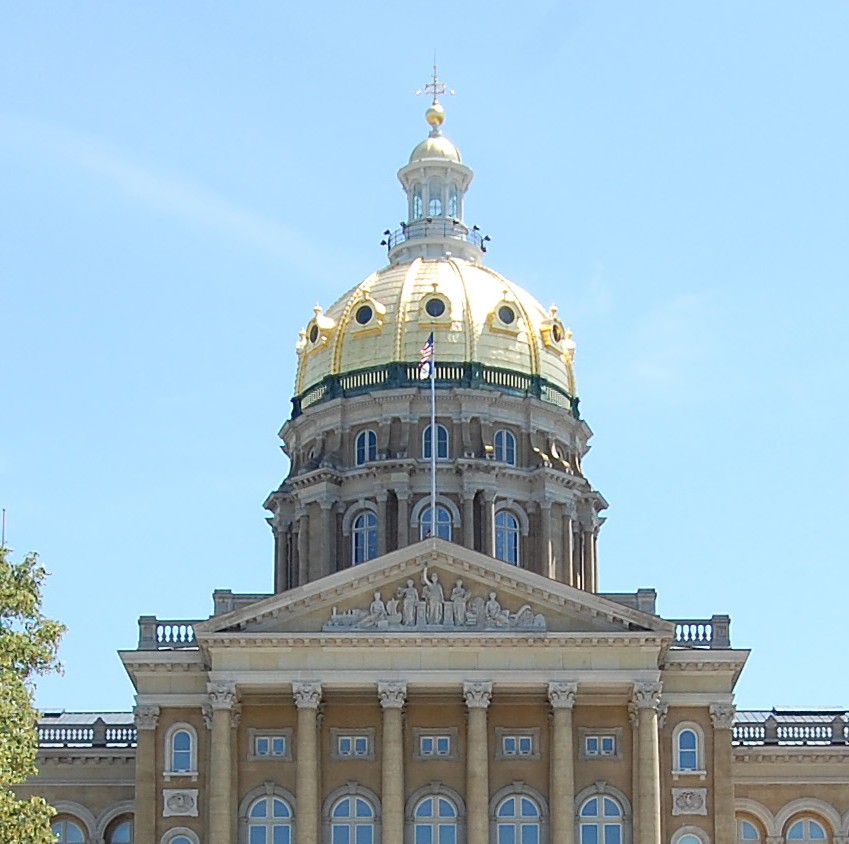
As mid-wives of the Kingdom of Heaven, it is incumbent upon the members of the body of Christ to deliver a formed conscience to every decision, including how to vote.
In hopes of aiding in that delivery, The Catholic Mirror has provided the following guidance on issues related to the current election, which can also be found by visiting the Iowa Catholic Conference website.
The information that follows is cited from the Iowa Catholic Conference.
Human Life and Dignity
The Iowa Catholic Conference holds the protection of human life and dignity as a foundational principle, including limiting elective abortions as much as possible. We see human life as priceless and belonging to God.
This leads us to other important concerns. We say “life AND dignity.” Human dignity means those things that are necessary for a genuinely human life: food and water, clean air, shelter, clothing, education, health care, peace and security, a place to work. These are the goods we hold in common with each other, and access in a similar way.
In the eyes of the Church, serving the common good is the reason that political authority exists. Government has a role to play in protecting the common good. At the same time, government should appreciate the limits of its power and recognize the role of mediating institutions.
Immigration
At the state level, the Iowa Catholic Conference supports the basic human rights of documented and undocumented immigrants and refugees. This includes fair treatment under the law for all workers including legal representation during deportation proceedings, a just living wage, fair labor practices, safe working conditions, and humane treatment of children and families. We also support legislation allowing undocumented high school graduates who are residents of Iowa to be eligible to pay in-state tuition rates at colleges and universities in the state of Iowa.
We oppose efforts to make state and local police responsible for the enforcement of federal immigration laws.
Many immigrants have been forced to leave their homes and countries in order to provide even for the most basic needs of themselves and their families. The desperation of their circumstances does not correspond to the inordinate length of time (sometimes over 15 years) required to wait in line for the present system to process a visa request.
Regarding federal legislation, we believe that those already here, for the sake of family unity and being humane, should receive special consideration that would include eventual citizenship. We support measures that help secure our border but respect human rights and human life. We need a system that is humane for workers and fair to employers.
While Catholics may disagree within the limits of justice on the specific approach to reforming the immigration system, we must agree as a people of faith to live out the scriptural commandment to “welcome the stranger” and defend the God-given dignity of every person.
We urge all Iowans to remember their history as immigrants as we work together towards a fair and compassionate resolution of this problem.
The ICC supports increased assistance for refugees.
Refugees are present in the U.S. legally. They are individuals who have fled their countries of origin and who meet the United Nations’ criteria of having a “well-founded fear of persecution for reasons of race, religion, nationality, membership in a particular social group, or political opinion.”
As you can imagine, refugees’ initial needs are many: food, clothing, shelter, employment, English language training, and orientation to a new community and culture. In the first 90 days, the U.S. government provides transitional assistance.
Catholic organizations around the country resettle about 30 percent of the refugees who enter our country every year. Catholic Charities here in Iowa will most likely resettle about 250 people this year.
Abortion
We oppose all abortions, no matter the method, but when abortions are taking place, the safety and informed consent of the women involved should be among our chief concerns. We have supported bills relating to prohibition of late-term abortions, informed consent, support services for pregnant women, and re-prioritization of government funds away from abortion providers.
Protecting the lives of these children about to be born should not be considered primarily a partisan issue or even a religious issue. For us, this is a question of the common good. Human life is precious and should be protected in our laws. It is in the best interest of the State of Iowa to welcome these new citizens into our midst. Americans reject permissive abortion and want limits to the unfettered destruction of unborn human life.
Health Care
The Catholic Church has millennia of experience as providers of health care for all, especially the poor. Among the causes that contribute to poverty are “inadequate measures for guaranteeing basic health care” (Compendium of the Social Doctrine of the Church, 447). It is in this spirit we reiterate our Catholic tradition that teaches that health care is a natural human right, essential to protecting human life and dignity.
We believe there are several criteria that should be considered when evaluating a health care proposal. It should 1) ensure access to quality, readily accessible, affordable, life giving health care for all; 2) retain longstanding requirements that federal funds not be used for elective abortions or plans that include them, and effectively protect conscience rights; and 3) protect the access to health care that immigrants currently have and remove current barriers to access.
Ultimately it is the role of our civil leaders to decide what is most practical in achieving the common good. We ask them to set aside partisan concerns and consider this issue with prudence and a commitment to the common good.
Specific positions include:
- Supports state initiatives that would make health care more readily available and affordable to all Iowans, including immigrants and their children.
- Opposes abortion, including direct or indirect public funding of abortion.
- Supports the conscience rights of medical professionals and institutions.
- Prohibit euthanasia and assisted suicide.
End of Life
The Iowa Catholic Conference opposes efforts to legalize assisted suicide and/or euthanasia.
Each and every person is created in the image and likeness of God. The dignity of the human person is the foundation of a moral vision for society and fundamental to Catholic social teaching.
The Catholic Church believes that consciously choosing to end one’s life is wrong, and assisting with someone’s suicide cannot be condoned. It is the destruction of life.
Efforts to legalize assisted suicide can gain ground because many people are understandably concerned about what they may face as they near the end of their earthly life. People don’t want to suffer and are concerned that they’ll be painfully hooked up to life-support machines indefinitely. Many wrongly believe that the Church says that life-support systems can never be removed.
In fact, our teaching distinguishes between killing — which is an intentional action or omission to bring about the death of another, and considered unacceptable – and allowing to die, which is withdrawing treatment that is no longer helping a patient and may actually be harming them. Medical and hospice care is such today that much pain and suffering can be relieved in acceptable ways.
We also should consider what physician-assisted suicide would mean to the medical profession. Trying to distinguish “treatment” decisions from “killing” decisions would be difficult at times. It would bring a new dimension to the healing profession – that of killing. Empowering physicians to kill those who are suffering is not a good way to end suffering.
On a practical level, the legalization of assisted suicide would inevitably mean pressure being put on people to insist on being put to death if they become a perceived burden. What kind of demands will be put on patients who will be perceived as a financial drain on the health care system?
While many in our society want to retain a perceived total autonomy over their own life and death, as Catholics we believe we are ultimately responsible to God for the stewardship of our life. The Resurrection of Jesus Christ gives us all a welcome message of hope.
Bioethics
Addressing the issues presented by the rapidly advancing arena of biotechnology and healthcare is an extension of our primary moral obligation as Catholics—to defend the life and advance the dignity of every human person.
We meet our obligation in the realm of science and technology as in others, by identifying those in most need of our protection and acting in their defense. In the realm of bioethics, it includes those at either end of the life spectrum, and any others placed at risk by their diminished capacity, whether physical or mental and emotional. According to our moral tradition, as their vulnerability increases, our corresponding obligation to defend and protect them increases, and society can be neither humane nor survive or thrive without first heeding that directive. Consequently, each decision in health care, biotechnology and science is ultimately guided by the prudential judgment of whether it advances life and dignity in its most vulnerable state, or is only accomplished at its expense. It goes to the heart of how we care for one another.
Bioethics is an integral part of Catholic social teaching as it advances the principle of solidarity and provides a path to action. Science and technology that enforce the creation of classes of powerful and weak and give the powerful authority to extinguish or alter the lives of the vulnerable at will undermine the virtue of community and the common good. Personally applying the principles of Catholic social teaching to the details of the daily lives of those around us advances the principle of subsidiarity, and the capacity to protect the most vulnerable and build a humane society from the ground up. Science and technology give Catholics another opportunity to “serve the ‘civilization of love’ and life,” in every profession and vocation, by applying the broad principles to the smallest details and the most vulnerable and anonymous lives.
Care for Creation
One of the seven core principles of Catholic Social Teaching as identified by the U.S. bishops is “care for creation.” We show our respect for the Creator by our stewardship of creation. Care for the earth is not just an Earth Day slogan, it is a requirement of our faith. We are called to protect people and the planet, living our faith in relationship with all of God’s creation.
Economic benefits and the creation of jobs are important but need to be balanced against any consequences to the environment where future generations and we will live. The ethical and moral dimensions should not be overlooked.
Specific positions include:
- Supports measures to preserve, protect, and improve the quality of the air, water, and land in Iowa.
- Supports strict enforcement of present environmental laws and adequate state funding for this purpose. The Conference favors local control.
- Strongly endorses legislation that requires industry, including agricultural related production operations, to be environmentally sound.
- Supports efforts to expand renewable sources of energy in the state of Iowa.
Freedom of Worship
The Iowa Catholic Conference supports initiatives that protect religious liberty and the legitimate exercise of the freedom of conscience. As we enter the public square, we ask that government recognize our First Amendment right to live out our teachings and be a good neighbor to society.
If we are not free in our conscience and our practice of religion, all other freedoms are fragile.
For more information, visit www.usccb.org/issues-and-action/religious-liberty.
Catholic Education
The Church has a long history of supporting parents as the first and foremost educators of their children. The Iowa Catholic Conference supports public policies that assist parents in exercising that right.
One of the primary missions of the Catholic Church in Iowa is the education of children. In 1836, ten years before Iowa achieved statehood, the first Catholic school in Iowa was started at St. Raphael Cathedral in Dubuque. Today there are nearly 30,000 students in Catholic schools across the state.
Our schools provide an environment that produces some of the finest graduates in the state and nation. These schools are an important stabilizing force in communities and make a unique contribution to the common good. We believe Catholic schools are among the best anti-poverty programs, offering first-rate education with higher achievement levels, moral truth, and discipline that speak to the development of the whole person.
Among the specific policies that the ICC is working on at the state legislature:
- Broadening financial assistance to families through education savings accounts, tax credits or other means to allow their children to attend the school of their choice.
- Expanding tax credits for individuals, businesses, or financial institutions who contribute to a “school tuition organization” that provides scholarships to low- and middle-income children who want to attend a nonpublic school.
- Equitable participation of nonpublic school children in federal- and state-funded programs.
- Full funding of public schools for the transportation of nonpublic school students.
- Continuation of assistance for students enrolled in accredited nonpublic schools through technology and textbook appropriations.
- Full funding of the Area Education Agencies.
- On-site special education assistance through the AEAs.
School Choice
Parents have the right to choose the kind of education best suited to the needs of their children. They should not bear an economic burden when choosing a private or religious school. In other words, tax dollars should be available to assist them in exercising that right.
The Iowa Catholic Conference supports parental choice in education by broadening financial assistance to families through education savings accounts, tax credits or other means to allow their children to attend the school of their choice. We also support the equitable participation of nonpublic school children in federally-funded programs.
Restorative Justice
The Iowa Catholic Conference supports legislation that prohibits sentencing juveniles to life in prison without the possibility of parole and provides for individualized determination of sentences. The Iowa Supreme Court has ruled that the sentences of inmates who were convicted of committing serious crimes as juveniles must be reviewed.
The underlying principle is that minors should not be treated as if they were equal to adults in their moral and cognitive development. While we believe in responsibility, accountability and legitimate punishment, a juvenile who commits a crime may not be as fully aware of the seriousness of their actions. Therefore their culpability may be lessened.
Offenders who commit very serious crimes when they are juveniles may gain with maturity an understanding of the gravity of their crime and be able to rejoin society under some conditions. Minors would still be held properly accountable for their actions and remain in prison if necessary.
The ICC also support sentencing reform that will emphasize community-based corrections for prisoners who are not a threat to the community and give greater latitude to judges when deciding appropriate penalties.